
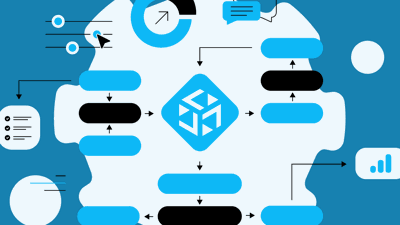


How digital publishing workflows can break down between hand-offs.
Most editorial delays don't come from one dramatic failure. They come from dozens of small frictions piling up at the points where work changes hands: a draft that sits waiting for a reviewer who doesn't know it's theirs to review, a calendar update that never reaches the section editor, a final sign-off that gets stuck because three people are technically allowed to give it. Understanding where those handoffs actually break gives editorial and audience leaders something more useful than a general sense that "things are slow." It gives them a specific place to fix.
The stages editorial content moves through before publication
Editorial content generally moves through the same sequence regardless of publication size: an idea gets pitched and approved, the story gets assigned with a deadline attached, someone writes or produces it, an editor reviews and requests changes, a final decision-maker signs off, and the piece publishes. Each of those stages hands ownership from one role to the next. The reporter owns the draft until it goes to editing. The editor owns the feedback until the writer incorporates it. The final approver owns the go or no-go call until the piece is live.
That sequence matters because it sets the expectation against which breakdowns get measured. When a story is late, the useful question isn't "which stage failed" so much as "which handoff between stages failed." That distinction is where the rest of this comes from.
Where the breakdown actually starts
Friction concentrates at the transitions, not inside the stages themselves. Writing takes the time it takes. Editing takes the time it takes. What eats the schedule is the gap between one person finishing their part and the next person starting theirs, especially when that gap involves switching systems or formats along with switching people.
Delays rarely stem from one major issue. They're usually the result of many small delays accumulating over the course of a story's life, each one small enough to shrug off on its own but large enough in combination to blow a deadline. And the source of that friction is structural, not personal. The problem generally isn't the editors, writers, or copy desk involved. It's a workflow that doesn't define what happens at each handoff.
Common failure points inside newsroom handoffs
That friction shows up in a few recurring, distinct ways: unclear ownership of a stage, dependence on one person's institutional knowledge, competing deadlines across desks, and communication spread across too many tools. Each one fails a different handoff in the sequence above.
Missing documentation and unclear role ownership
Drafts most often wait too long for review because it's unclear whose job the review is, or by when it's due. The fix is specific rather than general: assign a named reviewer and a review due date to that handoff, rather than leaving it as an implied responsibility. Without that, drafts become stuck in review, feedback scatters across tools, and nobody is sure who is supposed to make the call.
Undefined role boundaries cause a different, related problem. When anyone on the desk can weigh in on anything at any time, output quality tends to drop rather than improve, because feedback comes from too many directions with no clear priority among it. Naming who owns each stage solves both the delay and the quality problem at once.
Dependence on one editor holding the process together
Some newsrooms run smoothly because one editor happens to carry the whole workflow in their head: who's covering what, what's stuck where, who still owes a review. That works until it doesn't. When knowledge of workflow and status lives with an individual instead of being written down somewhere the team can see, the organization becomes less resilient to that person being out sick, on assignment elsewhere, or simply swamped.
The dependency is invisible on a normal day. It becomes visible on the day that editor is unavailable, which tends to be exactly the day a deadline is tightest. That's not a reflection on the editor. It's a sign the process needs to live somewhere more durable than one person's memory.
Competing desks with conflicting deadlines
A typical newsroom sequence assigns a named role to each step: an assigning editor approves the pitch and deadline, a section editor reviews the story and requests changes, a copy editor checks style and consistency, and a senior editor gives final approval. That sequence works cleanly for a single desk running a single story.
It gets more complicated once several desks, say news, features, and wire, each run that same sequence in parallel with their own assigning editor and their own deadline. When all of them converge on the same senior editor for final sign-off, approval routing has to reconcile competing priorities rather than simply processing stories in the order they arrive. Without a defined way to handle that, whichever desk shouts loudest or files last effectively blocks the others.
Communication scattered across tools
Remote and hybrid editorial teams run into a specific version of this problem with shared calendars: multiple people editing the same calendar independently produces conflicted copies, and nobody's sure which version reflects the real schedule. Lack of transparency between teams tends to produce silos among the creatives involved, even when nobody intends that outcome.
It compounds when email, shared documents, Slack channels, and phone calls all carry part of the same handoff at once. A change discussed on a call doesn't make it into the shared doc. A note left in Slack gets missed because the reviewer was working from email. None of these tools is the problem individually. The problem is a single handoff being tracked in four places instead of one.
Editing and review as a distinct checkpoint from approval
Editing and approval often get treated as one step, but they serve different purposes. Editing goes beyond proofreading. It's a critical defense against off-brand or off-strategy content making it to publication, catching problems with framing, sourcing, or fit before a piece is ready for a final decision. Approval is that final decision: publish or don't, as written or with changes.
Conflating the two creates a specific failure: several reviewers comment on a draft without clear decision rights, and their feedback pulls in different directions with no way to resolve it. Naming one final editorial decision-maker for each piece fixes that. Not every article needs every layer of review, either. The workflow should define which conditions, legal sensitivity, investigative reporting, or high-profile subjects, trigger additional approval, so routine stories aren't held to the same review load as the exceptions.
What workflow breakdowns cost in time and consistency
These frictions carry a measurable cost. Per SEMrush data cited by Cflow, 68% of content teams struggle with workflow inefficiencies, leading to a 30% drop in productivity. Separately, content teams can lose up to 16 hours a week to non-creative tasks tied to broken handoffs, according to Blogsync research: not writing, not editing, not strategizing, but chasing approvals, reconciling feedback, and managing version control.
That cost shows up in consistency as much as speed. The same Cflow report found that only 12% of marketers feel successful managing content strategically, even after ongoing effort to fix it. None of this is a claim about lost readers or lost revenue. It's a claim about where staff hours actually go when the handoffs aren't defined, and that cost is real even before it touches the audience.
Where structure and tooling help and where they don't
Automation genuinely helps with speed. Automation in editorial processes can cut content turnaround time by up to 50%, according to Cflow. But automation alone doesn't resolve who has final say when two desks disagree about priority. Software can move a draft along faster; it can't decide whose deadline wins.
Where tooling helps more directly is in making handoffs explicit rather than assumed. In one documented example, dependency mapping that enforced sequential handoffs eliminated roughly 45 minutes per person per day of coordination overhead, because each step carried a clear definition of done that didn't depend on who happened to be available that day. That's the mechanism worth borrowing regardless of which tool delivers it: a defined "done" state for every handoff, visible to everyone downstream.
A content management system built around assignment, review, and publishing stages, such as BLOX NXT, gives an editorial team one shared workflow to work from instead of a calendar, an inbox, and a chat channel each holding part of the picture. That doesn't replace the decisions about who owns what. It gives those decisions somewhere consistent to live.
What to ask about your own workflow next
With the failure points above in mind, the next time a piece stalls, the first useful question is whether it failed inside a stage or at the handoff between two stages. Writing that runs long is a different problem from a finished draft sitting untouched because nobody claimed the review.
From there, check whether every handoff in your process has a named owner and a deadline attached to it, the way an assigning editor and a section editor each own a distinct, specific step in a newsroom sequence. A handoff with a name and a due date attached to it is far less likely to be where things get stuck.
Finally, check whether your workflow accounts for more than one desk running its own deadline before assuming there's a single universal bottleneck to fix. A process that works for one desk in isolation can still break down the moment two or three desks are converging on the same reviewer or the same publish window.
References
"Scale Your Content: The Ultimate Editorial Workflow Guide." freelancewriting.com, https://www.freelancewriting.com/blog/editorial-workflow-managing-freelance-writers/.
"From manuscript to reader: What slows down time-to-market? - Schilling." schillingpublishing.com, https://schillingpublishing.com/insights/articles/editorial-workflows-in-publishing-from-manuscript-to-reader-what-slows-down-time-to-market-in/.
"The Ultimate Guide to Editorial Workflows - Cflow." cflowapps.com, https://www.cflowapps.com/editorial-workflow/.
"How to Improve Your Editorial Workflow | Teamup Blog." blog.teamup.com, https://blog.teamup.com/how-to-improve-your-editorial-workflow/.
"The 9 Editorial Workflow Tools You Need To Know In 2026." blogsync.io, https://blogsync.io/blog/editorial-workflow-tools.
"Editorial Workflow: 8 Steps, Examples & Template (2026)." multicollab.com, https://www.multicollab.com/blog/guide-editorial-workflow/.


